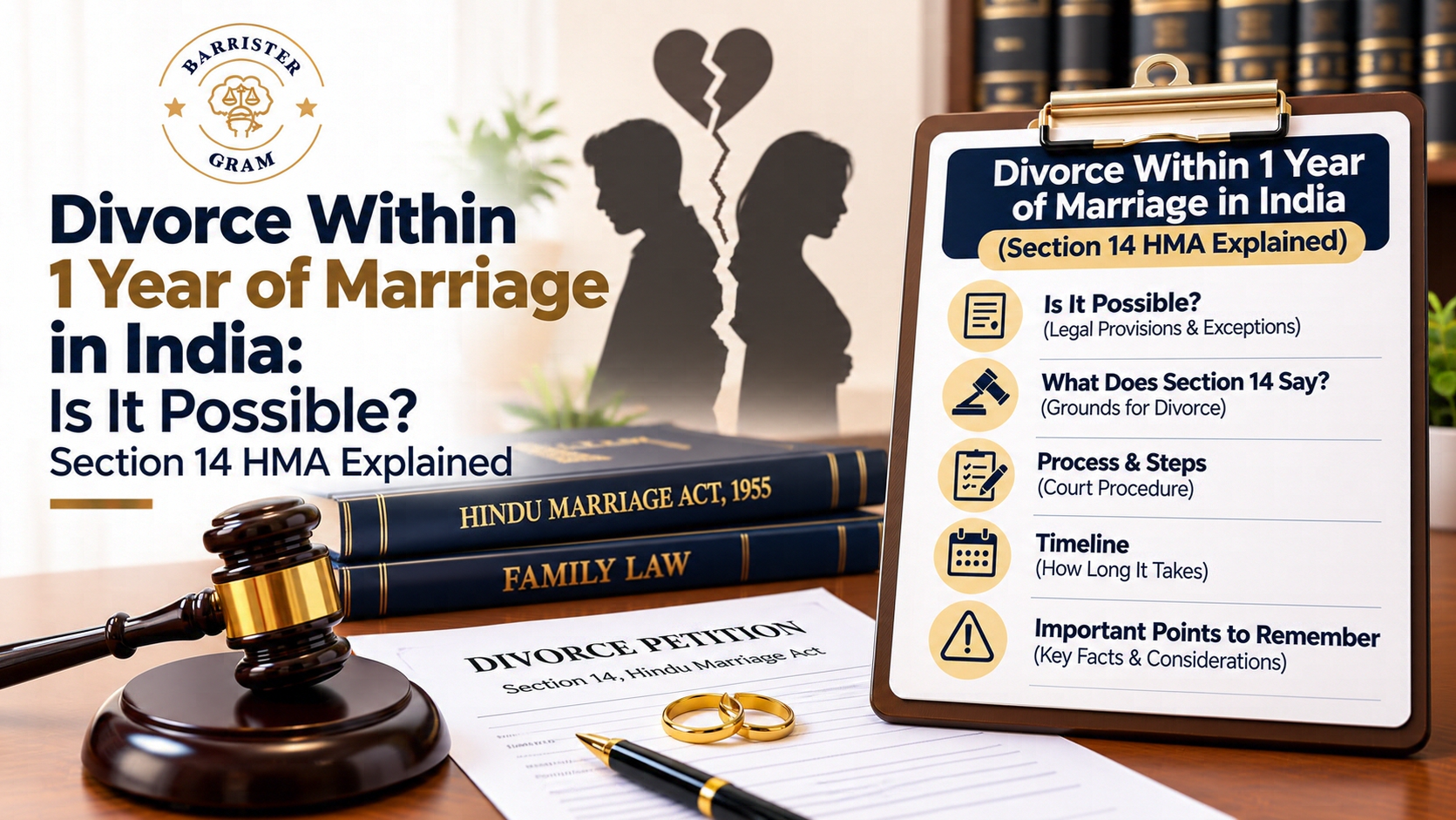
Divorce Within 1 Year of Marriage in India: Is It Possible? Section 14 HMA Explained
Generally, no divorce petition can be filed within one year of marriage under Section 14, Hindu Marriage Act, 1955. But the court can grant leave to file early if the petitioner shows exceptional hardship or the other spouse’s exceptional depravity. In December 2025, a Full Bench of the Delhi High Court held that this exception... Read More
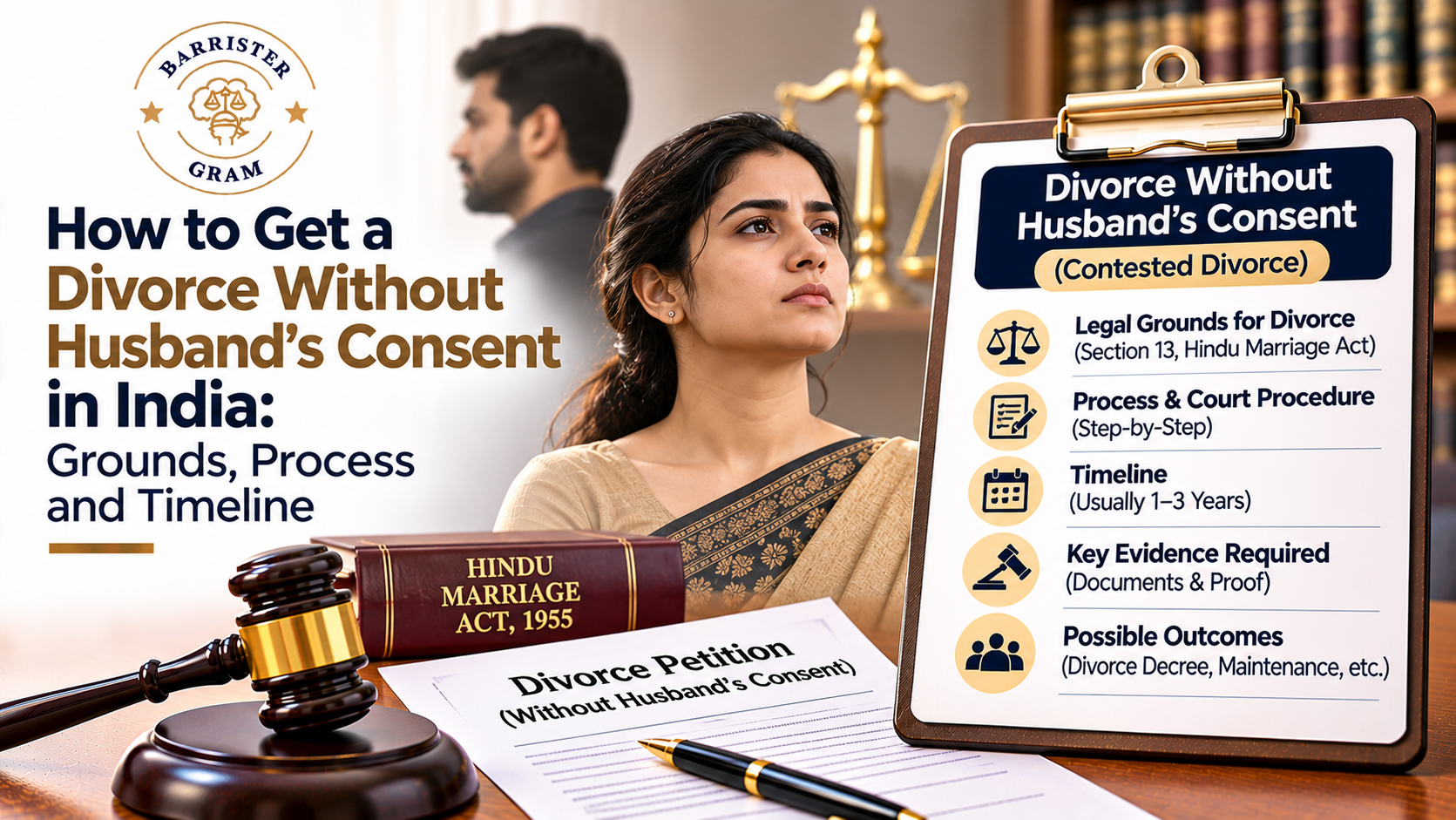
How to Get a Divorce Without Husband’s Consent in India: Grounds, Process and Timeline
Yes, a wife can get a divorce in India without her husband’s consent by filing a contested divorce petition under Section 13, Hindu Marriage Act, 1955 (or the law that applies to her marriage). She must prove a legal ground, such as cruelty, desertion for two years, adultery or mental disorder. If the husband does... Read More
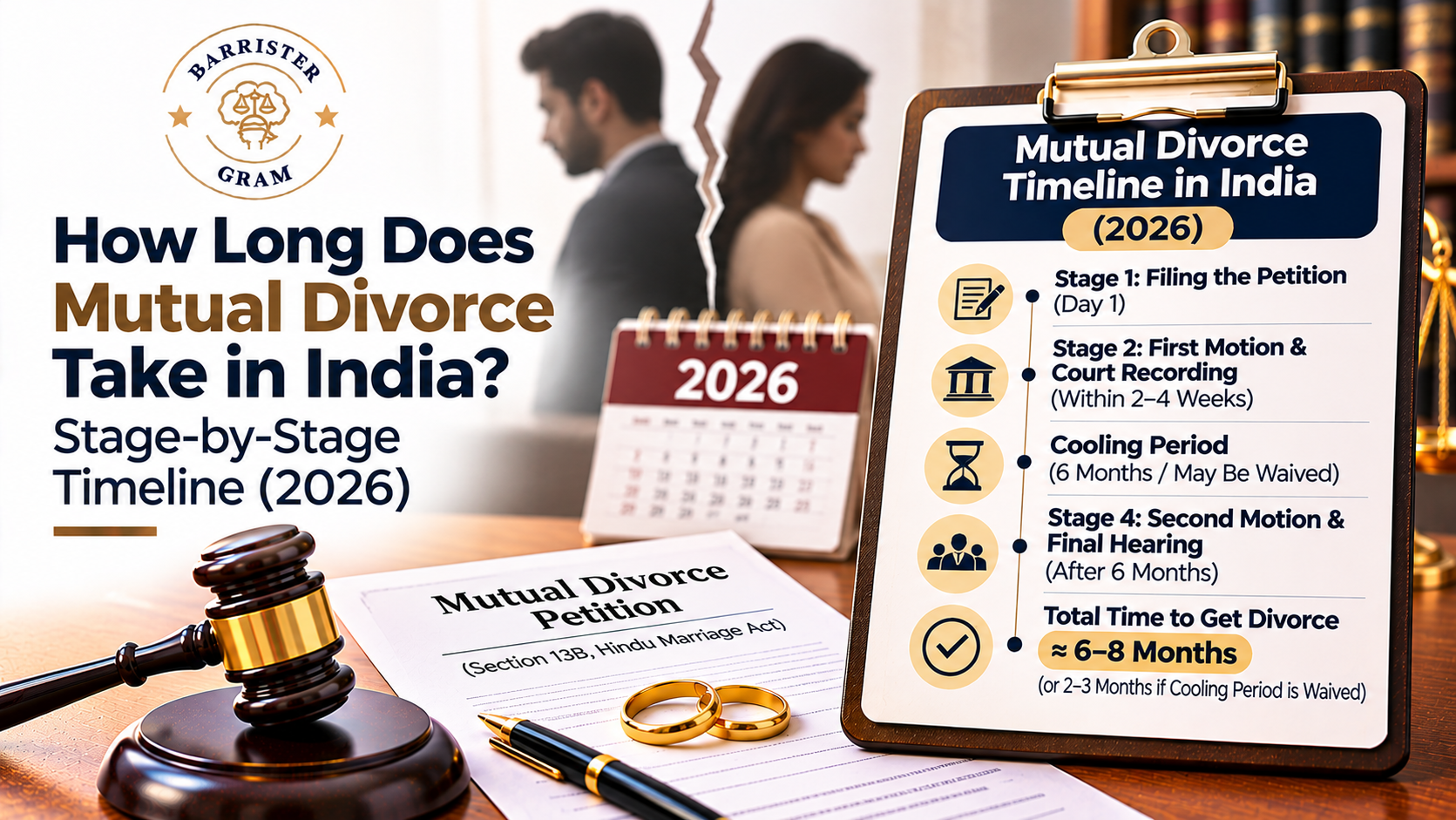
How Long Does Mutual Divorce Take in India? Stage-by-Stage Timeline (2026)
A mutual consent divorce under Section 13B, Hindu Marriage Act, 1955 usually takes about 6 to 18 months from filing, because the law requires a six-month gap between the first and second motions. If the court waives that period, the divorce can be granted in a few weeks to about three months. Before filing, the... Read More
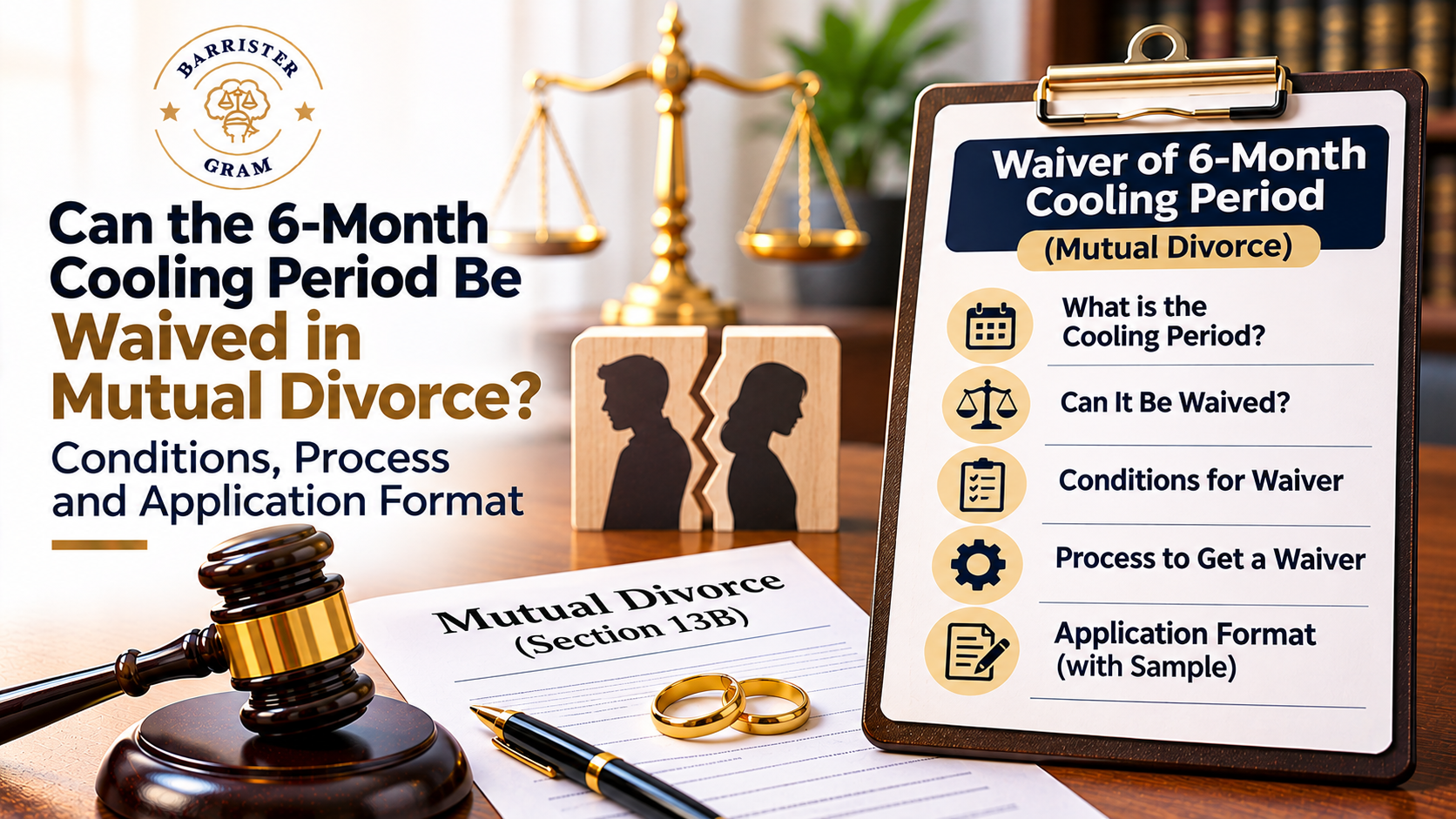
Can the 6-Month Cooling Period Be Waived in Mutual Divorce? Conditions, Process and Application Format
Yes. The six-month cooling period under Section 13B(2), Hindu Marriage Act, 1955 is directory, not mandatory, and a Family Court can waive it. The Supreme Court held this in Amardeep Singh v. Harveen Kaur (2017) and confirmed in Misha Somani v. Rituraj Somani (2026) that its conditions are not a rigid checklist. The couple must... Read More
Book a Consultation
Book a Consultation Tell Us Your Issue. We’ll Find the Right Lawyer. Share a few details and a verified advocate experienced in your type of matter will get in touch with you. Verified Advocates 100% Confidential OTP-Verified Requests No Obligation Consultation Request Fields marked * are required · takes about 2 minutes Confidential 1Your Details... Read More
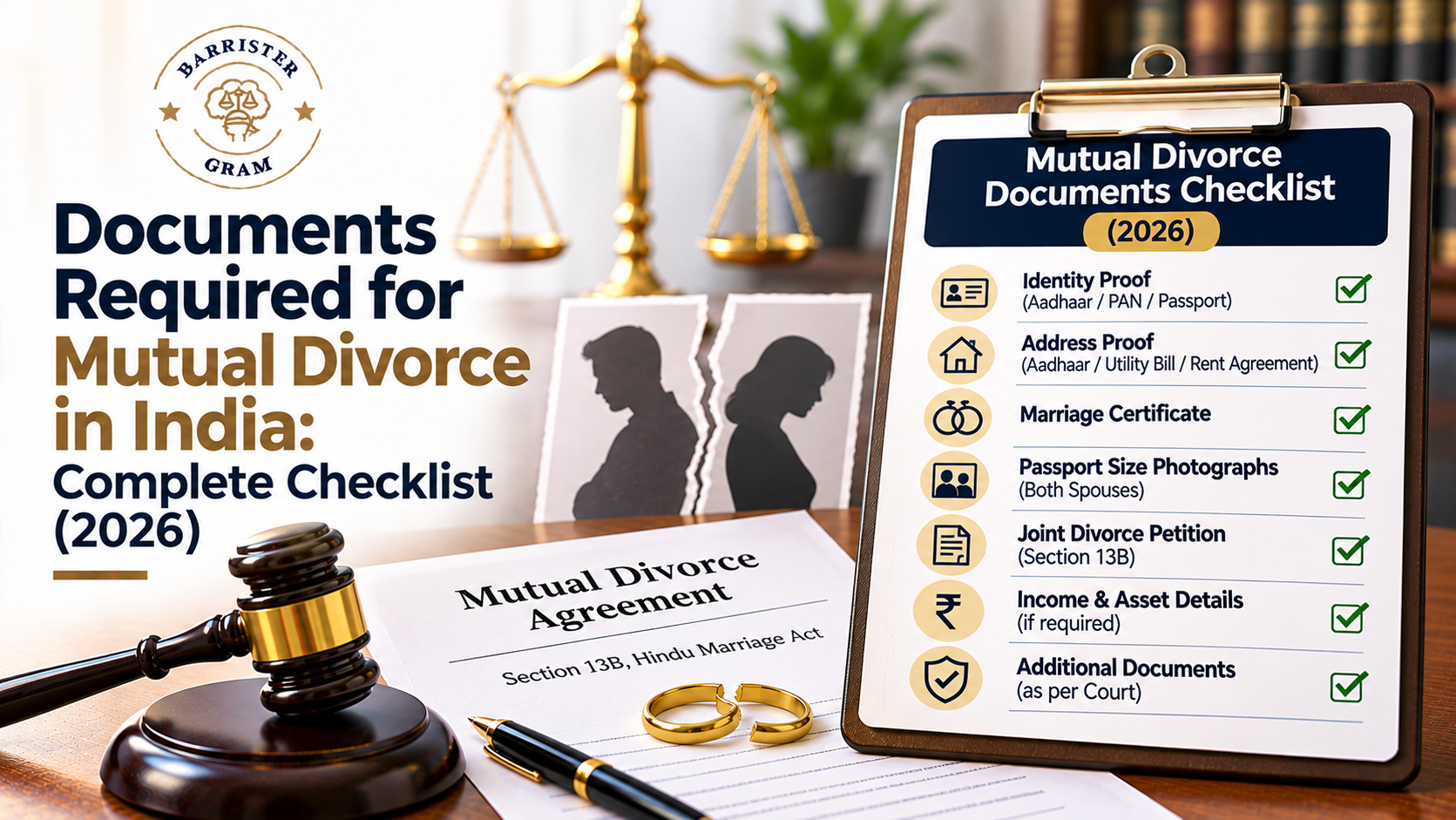
Documents Required for Mutual Divorce in India: Complete Checklist (2026)
For a mutual consent divorce under Section 13B, Hindu Marriage Act, 1955, you need a joint divorce petition,affidavits of both spouses, proof of marriage (marriage certificate or wedding photographs), address and identity proof, proof of living separately for at least one year, and a settlement agreement covering alimony, child custody and property. Both spouses must... Read More
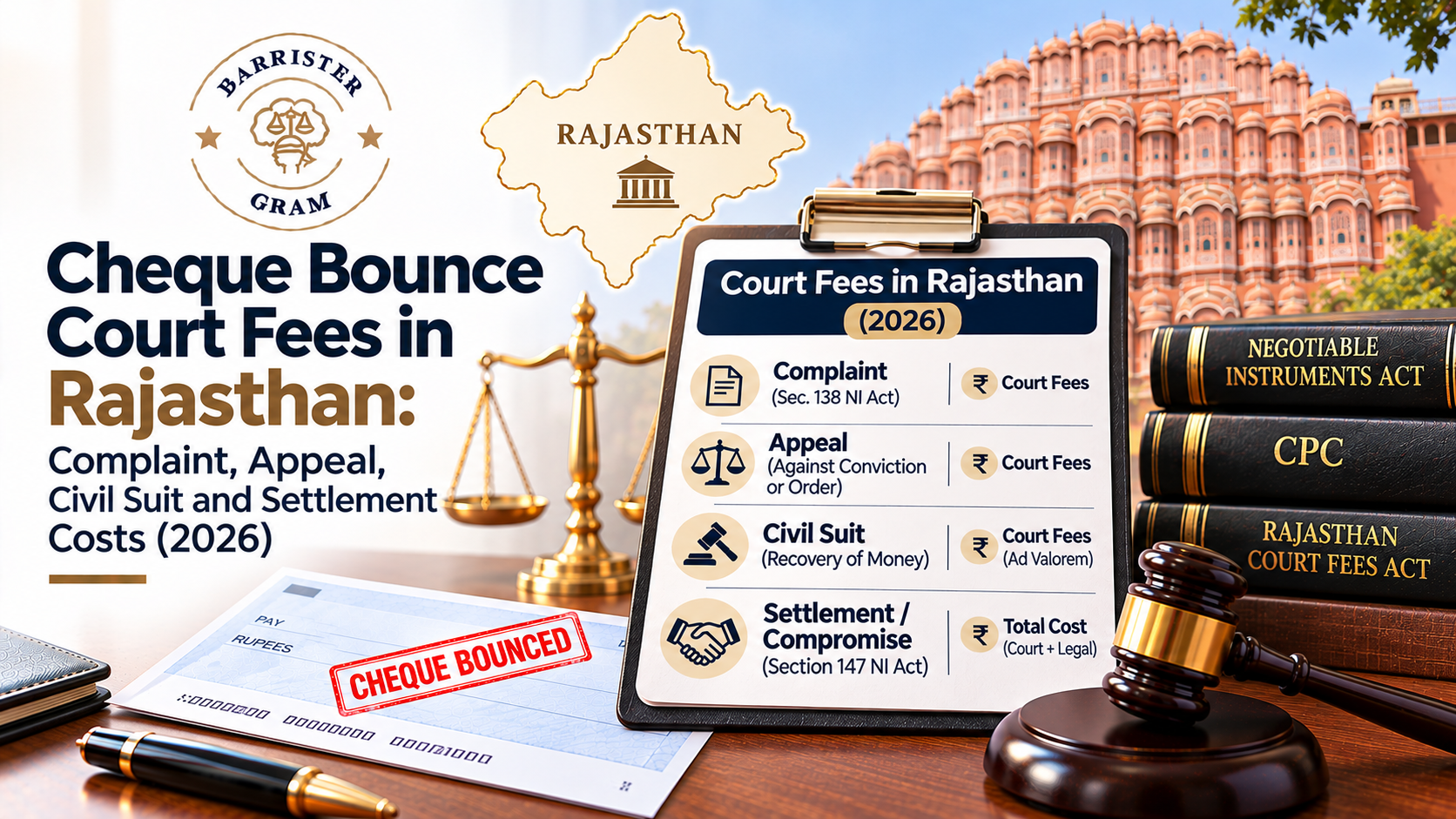
Cheque Bounce Court Fees in Rajasthan: Complaint, Appeal, Civil Suit and Settlement Costs (2026)
In Rajasthan, court fees for a cheque bounce case under Section 138, Negotiable Instruments Act, 1881 are governed by the Rajasthan Court Fees and Suits Valuation Act, 1961, not by the NI Act. A criminal complaint attracts a fixed fee, while a civil recovery suit attracts ad valorem fees based on the amount claimed. Settlement... Read More
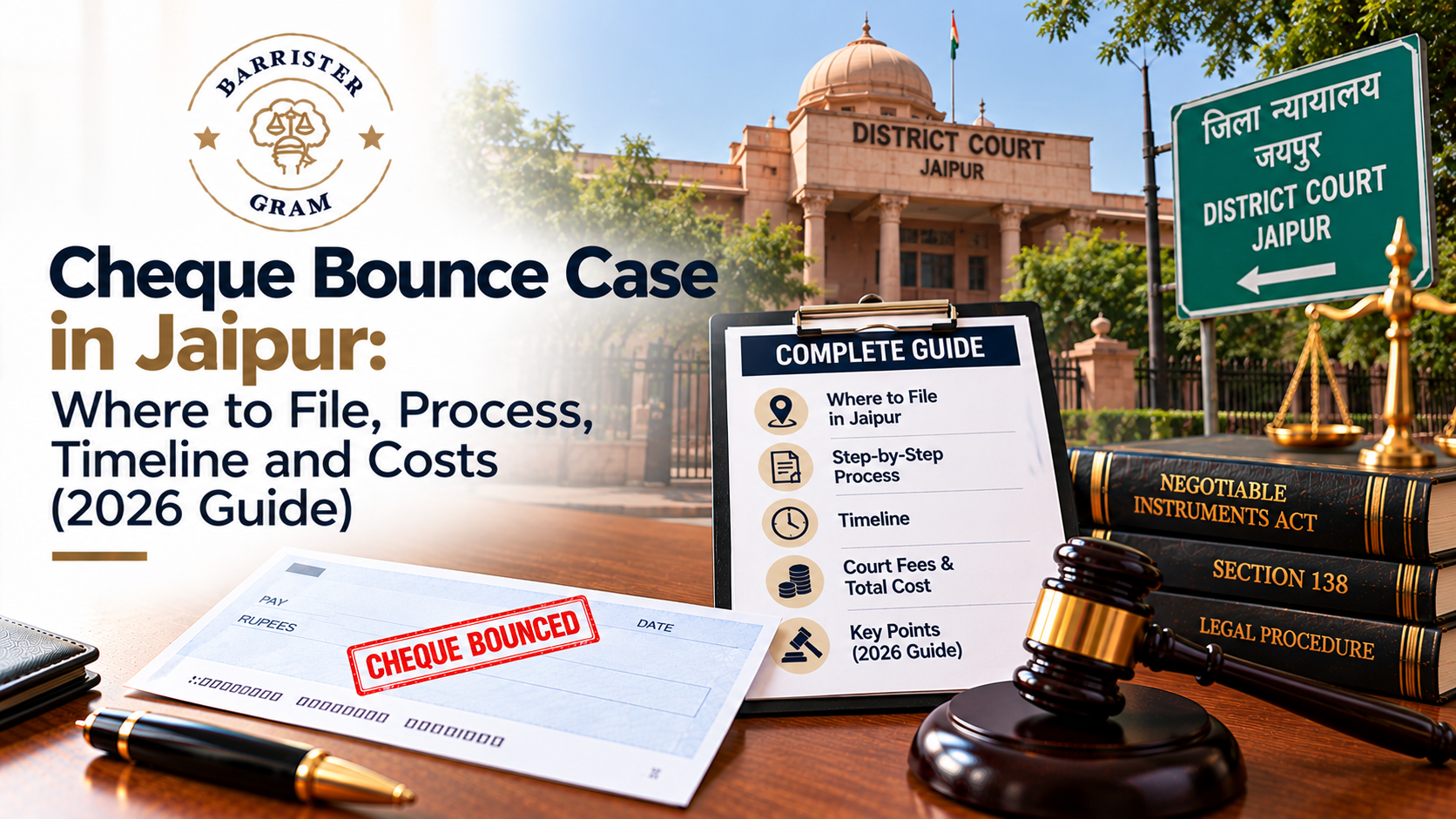
Cheque Bounce Case in Jaipur: Where to File, Process, Timeline and Costs (2026 Guide)
If a cheque bounces and you hold your bank account at a branch in Jaipur, you can file a complaint under Section 138, Negotiable Instruments Act, 1881 before the Magistrate’s court in Jaipur with jurisdiction over that branch. First send a legal notice within 30 days of the return memo, allow 15 days for payment,... Read More
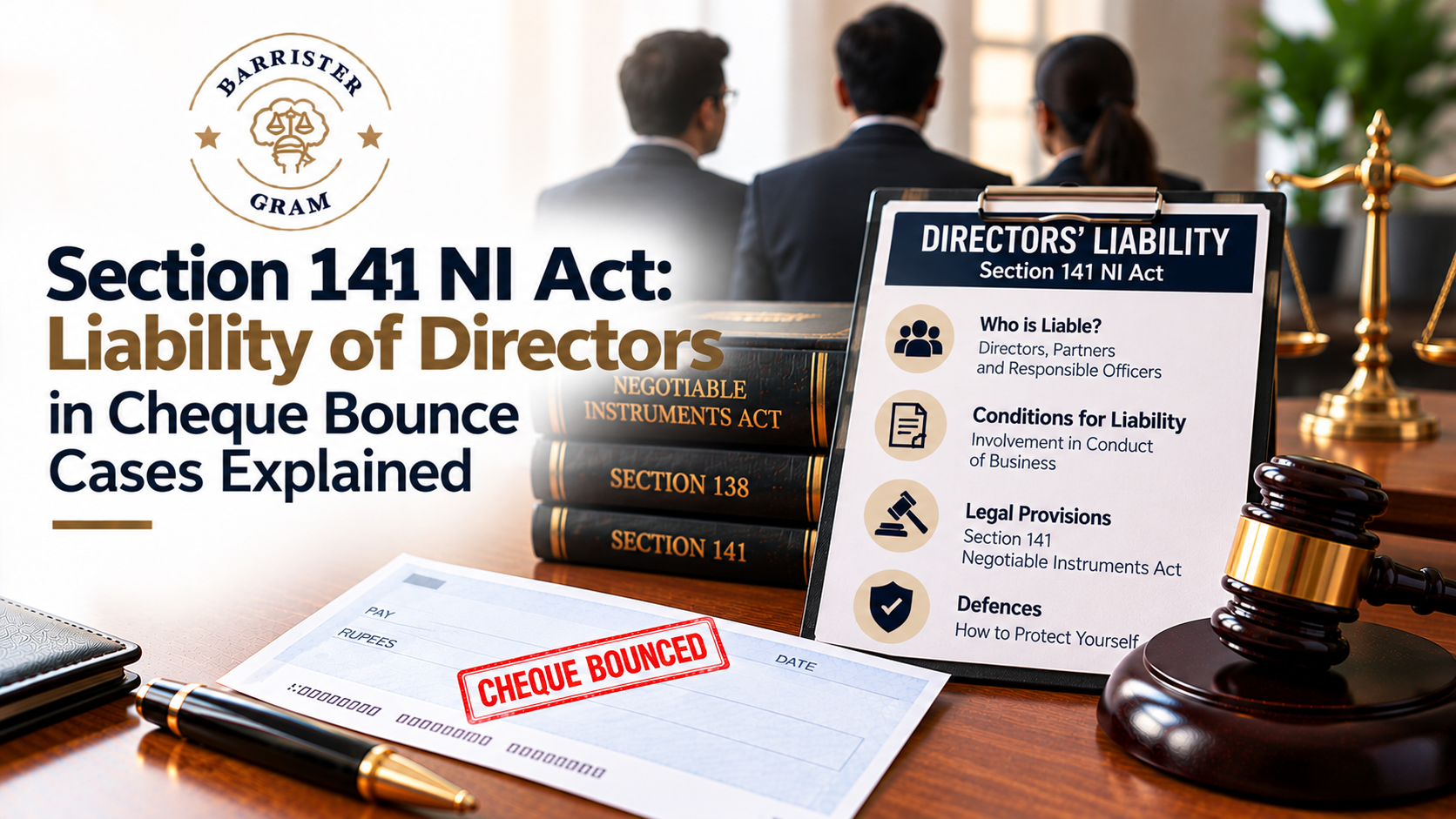
Section 141 NI Act: Liability of Directors in Cheque Bounce Cases Explained
Under Section 141, Negotiable Instruments Act, 1881, when a company’s cheque bounces, the company and every person who was in charge of and responsible for its business when the offence was committed can be prosecuted. Managing directors and cheque signatories are usually liable, but non-executive and independent directors are not, unless the complaint shows their... Read More
Interim Compensation Under Section 143A NI Act: Meaning, Amount, Conditions and Refund
Section 143A, Negotiable Instruments Act, 1881 allows the trial court to order the accused in a cheque bounce case to pay interim compensation of up to 20% of the cheque amount while the case is pending. It must be paid within 60 days, extendable by 30 days. The power is discretionary, not automatic (Rakesh Ranjan... Read More